High-Performance Management and Team training
High Performance Team
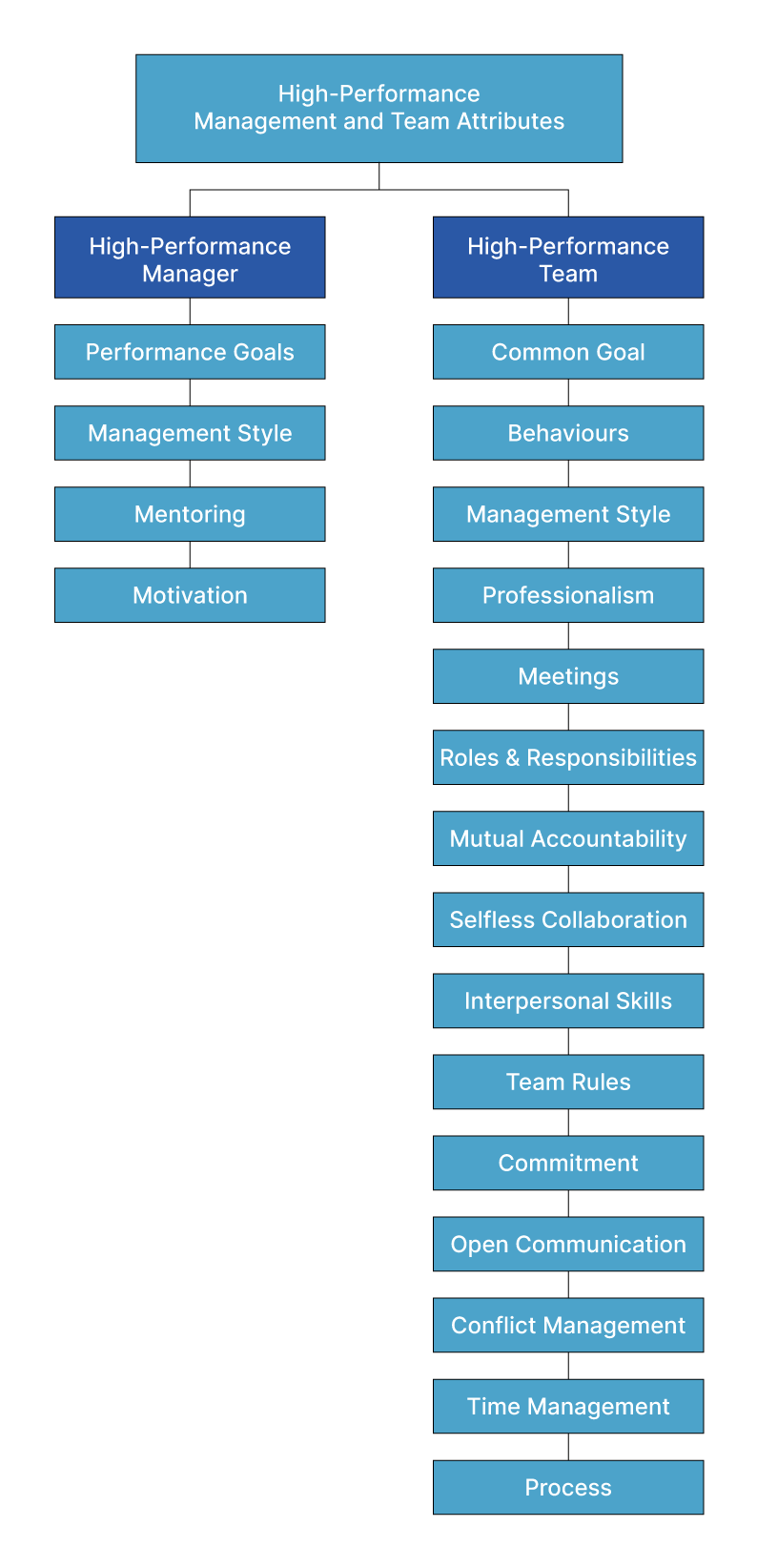
To build a high-performance team requires firstly team manager training followed by team training. The team manager needs to adopt four management attributes (Management Style, Performance Goals, Mentoring and Motivation) before training of their team can commence. Secondly, team training involves the team taking on board new team attributes to change their way of working, their behaviour and how they view themselves. The result is a self-managing, structurally flat team that is effective, cohesive and capable of organic improvement.
Achievement of full benefits takes on average three to six months, during which time the team adapts and becomes comfortable with its new situation. As shared team successes start to accrue, confidence increases bringing about an appetite to manage increased risk; innovation starts to emerge and the teams capacity for work increases. The actions and language of team members now starts to influence those around them, pushing down and out the high-performance team culture. Morale improves due to increased job satisfaction, turnover goes down, new efficiencies are realised and repetitive tactical work gives way to more strategic activities.
Any team or person can achieve high performance; it is a straightforward process that can be implemented by a team manager or a facilitator. It only requires some determination, an open mind and an agreement amongst the team members to be open and honest and to have a go. The time investment is about an hour and half a week for two months to complete the whole of the High-Performance Management and Teams process, lessons can be cherry picked and customised. The process, proven across the corporate sector, can yield outstanding results. As its author, it is something that I am very proud of, as it has allowed me to bring to the table my 40 years of team building experience. There is nothing more satisfying than to see what is otherwise considered to be an ordinary, dissatisfied team; realise their potential and become the envy of their peers.
That is why I do what I do.
You can share this post by using the buttons below
You can follow me on Facebook, Twitter, LinkedIn, Medium and Slideshare
I would love to hear from you if you have anything to offer on the subject of this post